Death
‘We won’t be renewing your contract.’
I strained to smile, and nodded understanding as the HR manager delivered this news. It wasn’t unexpected. I wasn’t been happy in my job. My supervisor and I clashed every day. This was the push out the door I needed.
–*–
‘Mum’s in hospital.’
I listened to dad tell me what was wrong with her (he didn’t know); what the doctors were doing (he didn’t know); and how long mum would be in hospital (he didn’t know). None of it was reassuring.
‘I’ll go visit her,’ I said.
–*–
My mother and I had always had a complicated relationship. You see, I was adopted, and she valued what other people thought, above all else. When these two facts were put together it meant: a) I was forbidden from mentioning I was adopted, to anyone; and b) she constantly judged me for being different from the rest of the family.
Of course I was different! I was from somewhere, someone, else!
Yet I was closer to her than my father or siblings. I clung to her, even in my teenage years. She was my protector; she was my master. One word from her set the world ablaze with joy or plunged it into dark depression. She was all powerful, all manipulative, all the time.
–*–
I visited her in hospital every other day. Lucky I was unemployed, affording me the time to spend with her as she died. When her condition deteriorated she was moved to the palliative care unit. Any day now. Any … day … now …
One day I told her I thought she was brave, the way she was facing death.
‘What else can I do?’ she responded.
My ingratitude returned to old thought patterns.
You could complain, my inner voice said, or blame someone else – the doctors, the disease, me. You could tell us all to go away. Or tell us what you really think of us. You could make this all about you, like you make everything all about you.
Foolish, broken me. This was her death. It was all about her.
–*–
I told my therapist I was looking forward to being rid of her; then I would be free to be me. He asked me who that was. Idiot. After all these years he should know the answer to that question: I had no idea.
He told me to say something meaningful to my mother before she died, to let her know how I felt about our relationship.
‘Like what?’ I asked.
‘Like, you frustrate me,’ he suggested.
That afternoon I sat by my mother’s death bed, alone with her for the first time.
‘You frustrate me,’ I said, out of the blue.
‘You frustrate me too,’ she replied.
It didn’t provide the closure my therapist had implied it would. I smile at her; she ignored me; I went home.
God damn it! She was so frustrating!
–*–
We were in the hospital lounge, my brothers and I, eating greasy fast food, when dad walked in and said, ‘She’s gone’.
We rushed to her room. She laid there, still, a statue of alabaster and silk, looking as delicate as a cobweb and as peaceful as a swan gliding across a lake. I touched her hand.
‘Her skin is so soft,’ I commented to no-one.
A nurse stood in the doorway, a mask of sadness adorning her face, just as she was trained.
‘I’m so sorry for your loss,’ she said, low and mournful. We thanked her and went back to ignoring her.
‘You’ll need to clear the room in thirty minutes,’ she said. That made us pay attention.
‘What?’ my brother asked.
‘We’ll be moving her to the morgue and preparing the room for someone else,’ she explained. Her mask slipped, revealing the pragmatist beneath. ‘Take what you want. We will dispose of anything left behind.’
We gaped at her. I seemed death waited for no-one. She pushed her mask back into place, gave us a pitying smile, and shuffled away.
We looked at each other, then flew into action. We stripped pictures from the walls and flowers from the windowsill. We packed her clothes into plastic shopping bags. I emptied her bedside drawers into her toiletry bag.
Except for her Valium. That I slipped into my pocket when no-one was looking.
I might as well get something out of this, I thought, besides being rid of her.
–*–
‘How do you feel now?’ my therapist asked.
‘Lighter. Like a weight has been lifted from my shoulders,’ I said. ‘Knowing she is gone, that she isn’t out there somewhere judging me, feels great. I feel free.’
‘Do you miss her?’ he asked.
‘No,’ I said. No, I don’t.
‘What now?’ he asked.
I felt silly, sitting there, talking to him about things he didn’t understand.
‘I don’t think I want to see you anymore,’ I said. ‘You’ve been great, but I don’t need you.’
© David McKenzie 2022
Taking space, giving space
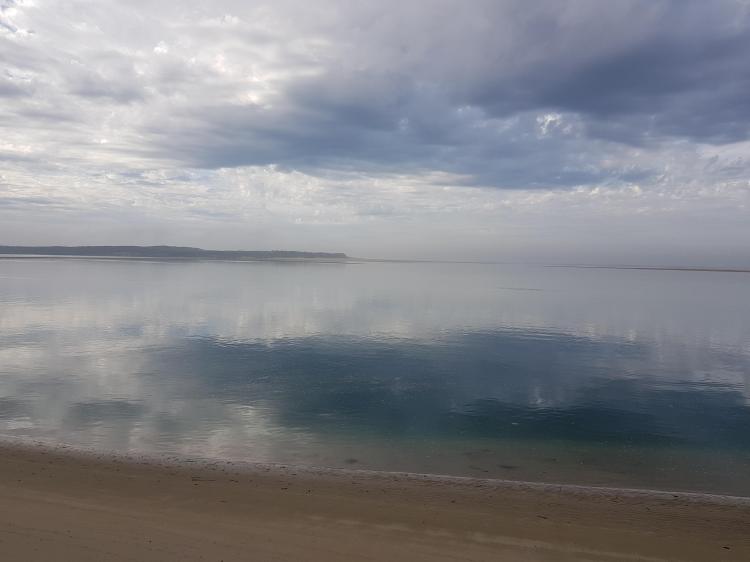
Being an adoptee meant contorting myself into family spaces. First, there was my adopted family. Then, there were my biological families — once I tracked them down. And finally, there was my found family. In each case I was an outsider, invited to join other, functioning human beings as part of a family. In each case it was assumed that I was a functioning human being; that I was similar to them; that I could assimilate.
*
My adopted parents brought me into their lives to fulfill their need for a ‘complete’ family. After two children and a number of complications, my mother was told she could not have any more children. A crushing blow. They proceeded to the nearest Catholic hospital, where innocents were ripped from the wombs of unwed, teenage sinners and thrust into the loving arms of god-fearing parents-to-be.
They picked me from a line-up of similar babies, future sinners all of us, and took me home like a frozen turkey to be thawed and consumed later. They already had two children; how difficult could it be to bring another into the fold? I would never know the difference, surely. They made a space for me, and placed me in that space. They never considered if I fit that space. I didn’t. It dug into my back and pinched my legs.
Then the unthinkable happened — my mother became pregnant. I now had a little brother, and my space shrank to accommodate him. He was ‘the miracle baby’; the child who was never meant to be. I was the interloper, occupying corners and shadows. Suddenly, I was taking up precious space that was not my birth-right.
I grew throughout my adolescence, as most of us do. My clothes were replaced as I grew taller, and new shoes were bought at the start of each school year. Yet I wasn’t permitted to take up any more room as a teenager than I was had as a small child.
Time passed, and my siblings needed more — attention, chattels, space. But resources were finite in our house. These things had to come from somewhere. The most logical response was to take them from the stranger and give them to the blood-kin. I would never know the difference, surely. I mean, they saved me from a life of sin. Right?
I knew, I just knew, that somewhere out there was family with a space for me; a me-shaped hole that only I would fit. My Cinderella space. All I needed to do was find them.
*
My biological mother was a blast. She was beautiful, funny, intelligent, and the life of the party. I couldn’t believe my luck, finding her and finding out about her. I nodded and smiled and laughed and was awed. She had been looking for me. Me! All her life she felt me, missing but present. I couldn’t wait to step into the space she had saved for me; my space.
Yet when I did, I found it very crowded. My mother had filled it with people and places and memories, anything to remove the guilty sight of my absence. My face pressed against my brother’s back; my sister’s elbow dug into my ribs. In the dark corners I could hear her lovers whisper and snigger. And hovering over us all were the unholy images of her own parents.
It seems a space cause pain. She had been in pain for so long, after I was stolen from her, she had to treat that pain with any remedy at hand. The first salve was marriage, followed by a replacement son, then a daughter. The marriage was doomed from the beginning of time, and the children’s trust was lost. Then came the lovers, leaving footprints on her heart.
She tried so hard to fill my vacancy that by the time I returned to her the position had changed so much it was no longer mine. No matter how I contorted, no matter how I twisted my mind, I could never fit in that space again. I wasn’t that baby anymore.
I lingered on the periphery of their spaces; a brother and a son who once didn’t exist. A ghost relative. I no longer required room of my own, for no specter can reside in the material world.
*
My biological father was a space thief from birth. Born at the end of WWII, to a French mother and German soldier father, he was an outcast in his remote mountain village. He was shipped off to be raised by an old couple in a nearby town, relieving his mother of the need to defend his space-wasting presence. She replaced him with a newer, shinier model — a brother with an American soldier father. He didn’t take up space; he made space appear out of nowhere!
I met my biological father for the first time at a restaurant. I was jammed into a corner between the wall and his wife; between a rock and a hard place. He barely spoke to me all night. Over time I began to trust him, and he opened up more. We shared stories and thoughts and opinions. He was old school, though, which was the downfall of our relationship.
At a family function he didn’t like something I had said (to this day I do not know what this was, he has never told me). A week later I received a text message from his wife, absolutely decimating me. She accused me of all sorts of behavior and judgement toward my father. I knew this attack was coming from him, as his other children had told me this was his modus operandi — hiding in the background while his wife did his dirty work.
That was that. A relationship given, a relationship taken away. He closed all the spaces where I might get in; nailed boards across the windows of his emotions to keep me out.
*
But my found family. Ah! There’s a tour de force!
They are a collection of disparate people, amassed over the years like a snowball growing as it rolls down a hill. Some of them made space for me. Some I asked to make space for me. And others jumped up and down in excitement when they saw I fit perfectly into the empty space beside them. In every cases, I was given space to be me.
Like my other families, my found family assumed I was a functional human being and could assimilate. Unlike my other families, they did not withdraw when they witnessed the truth. When I failed to function, they entered the space around me to ensure I was supported. When I fought against assimilation, they widened the space to give me room to find myself again.
This is the true essence of family. This is what I found in my chosen family. These are people who decided I did not take up space; that I deserved to have my own space; and whose space I defend in return. They are the people who give freely, and expect nothing in return but love and laughter.
We are all adoptees in this family.
© 27 November 2021
Should a gay writer be a gay writer?
I don’t remember deciding to become a writer. You decide to become a dentist or a postman. For me, writing is like being gay. You finally admit that this is who you are, you come out and hope that no one runs away. (Mark Haddon, author of The Curious Incident of the Dog in the Night-Time)
I recently saw a debate on Twitter about the responsibility LGBTQI+ writers have to use their own experiences in the work they produce. The counter argument said that LGBTQI+ writers should be able to write whatever they want, not necessarily LGBTQI+ works alone.
It’s an interesting concept. Often, as writers, we are told to write what we know. We are told that using our own experiences will make for richer and more authentic reader engagement.
Does this mean LGBTQI+ writers should be limited to writing LGBTQI+ stories only?
When I was starting out as a writer a few years ago, I struggled with this question. I talked about my identity as a writer with my therapist, as it was something I was unsure how to navigate. What did it mean to call myself a writer? And should I be calling myself a ‘gay writer’?
At that time, I didn’t want to write anything autobiographical, even if it was highly fictionalized. I didn’t want to write a ‘gay’ story either and writing anything autobiographical equated with writing a gay story in my mind.
I discussed with my therapist my reluctance to write ‘gay’, about not wanting to be pigeon-holed as a ‘gay writer’, and not wanting to be limited to LGBTQI+ readers. That should give you some idea of the kinds of prejudices I held about myself! I thought that if I wrote a ‘gay’ novel, I would be forever trapped in ‘gay literature hell’, unable to write anything different for fear of being rejected by the literati.
It was a good thing I discussed these thoughts with my therapist, as they led straight to the internalized homophobia I’ve carried all my life. But this article isn’t about my therapy, it’s about being a gay writer.
So, how did I get over my prejudices? How did I reconcile the idea of being a ‘gay’ writer, with actually being a ‘gay writer’?
Easy. I became a gay writer.
I say easy, but it actually took a lot of work.
The first novel I started writing was a story based on letters my great-grandmother received from a Red Cross volunteer in London, as she nursed my great-uncle until his untimely death. I loved the factual basis for this story. I loved that I had the actual letters from the Red Cross volunteer to inform her character and the narrative.
I just couldn’t write it.
For six months I tried to force this story out. Despite its place in my family history, I didn’t feel a personal connection to the story. I realized I was writing this story because I thought it would sell. I thought it would resonate with a wide audience. I thought it had the potential to be popular.
None of those reasons were enough. They weren’t enough for me to feel the story. They weren’t enough for me to write the story. So, I put it away in a drawer and thought about what to write instead.
This led to re-examining my thoughts about what it meant to be a ‘gay’ writer.
And then a story began to form in my mind. The story of a thirty-something gay man, who’s boyfriend leaves him, and all the walls he had built around him begin to crack.
Basically, I had the outline of a gay novel. Oh, no! Exactly what I wanted to avoid! Did this mean my writing career was over before it began?
The opposite, in fact. As you can guess, I took these feelings to therapy. I discussed the need to write something that I felt connected to, that was personal, but not autobiographical. The idea of being pigeon-holed as a ‘gay writer’ no longer worried me. In line with issues my therapist and I had talked about for years, I realized the only person judging me and holding me back, was me.
I could write a gay novel about a gay man and gay themes. I could write a straight novel about a Red Cross volunteer and a soldier during WW1. I could write a collection of stories about a lesbian private investigator and her ghosts.
As a gay writer, I do not owe the world only gay stories. I am a writer and I am gay and I am a gay writer. These ideas are intertwined in my identity, yet they are not mutually dependent.
My advice to you — be the writer you want to be. Be the writer that produces your best work. Be yourself, and your readers will feel it in your writing.
I am a gay writer, but I am also a Scottish writer and some days a lazy writer, or a funny writer. Being gay is just part of who I am. (Damian Barr, author of You Will Be Safe Here)
© David McKenzie 2021
Follow My Blog
Get new content delivered directly to your inbox.
 David McK Writes